Interesting facts about burke and wills
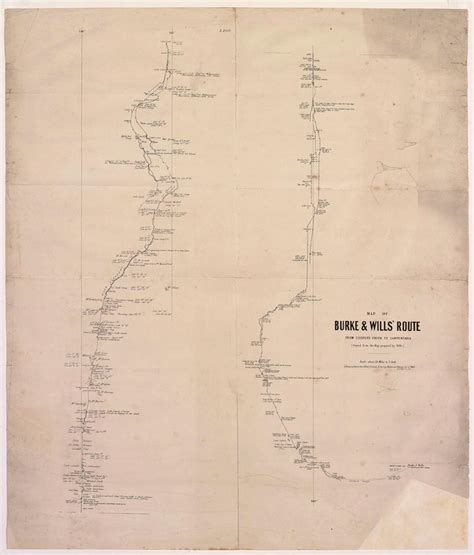
Map of the Burke and Wills expedition. The Burke and Wills expedition was organised by the Royal Society of Victoria (RSV) in Australia in 1860–61. It initially consisted of nineteen men led by Robert O'Hara Burke, with William John Wills being a deputy commander. Burke and wills family
Robert O’Hara Burke, William John Wills, John King and Charles Gray became the first Europeans to cross Australia south to north when they reached the Gulf of Carpentaria in February 1861. The death of Burke, Wills and Charles Gray during their return led the expedition to be mythologised in Australian culture as a heroic failure. Burke and wills map
Forever strung together as one, bonded in death, Robert O’Hara Burke and William Wills are two of Australia’s most famous, and tragic, explorers. The first to successfully cross the continent from south to north, they died beside Cooper Creek in south-west Queensland on the return journey. Burke and wills timeline
Robert O'Hara Burke (1821-1861), explorer, was born at St Clerans, County Galway, Ireland, second of the three sons of James Hardiman Burke and his wife Anne, née O'Hara. The Burkes were Protestant gentry and landowners, and the father and all his sons were soldiers. The Burke and Wills expedition was organised by the Royal Society of Victoria (RSV) in Australia in 1860–61. The Burke and Wills expedition was organised by the Royal Society of Victoria (RSV) in Australia in 1860–61. It initially consisted of nineteen men led by Robert O'Hara Burke, with William John Wills being a deputy commander.
The expedition, one of the most expensive in Australian history, was led by Robert O'Hara Burke, an Irishman with no exploration experience or skills in. Robert O’Hara Burke, William John Wills, John King and Charles Gray became the first Europeans to cross Australia south to north when they reached the Gulf of Carpentaria in February 1861. The death of Burke, Wills and Charles Gray during their return led the expedition to be mythologised in Australian culture as a heroic failure.
Why did burke and wills go on their expedition
Robert O'Hara Burke (6 May 1821 – c. 28 June 1861) was an Irish soldier and police officer who achieved fame as an Australian explorer. What did burke and wills discover
The Burke and Wills expedition was created with the aim of exploring the Australian interior and finding a suitable path for the Australian Overland Telegraph Line (which would connect Australia with the rest of the world, in terms of fast communication, by linking up with the cable which was in Java, via sea cable, thus ultimately establishing.
Burke and wills history
Robert O’Hara Burke (1820-1861) and William John Wills (1834-1861) were Australian explorers who were the first Europeans to cross Australia from south to north. They both died on the return trip, from exhaustion and hunger.